The ADHD Environment Design: A No-Shame Way Back In
A lot of ADHD advice quietly assumes you should be able to restart anywhere. At any time. With the same energy. In any room.
That is fake.
Environment matters. Not because you are fragile. Because friction is real. If the room hides the first step, adds five micro-decisions, or reminds you of every unfinished thing at once, restarting gets expensive fast.
That is why environment design helps. It is not about becoming a minimalist robot. It is about making it easier to get back in without needing a motivational speech first.
What environment design actually means
Environment design is just setting things up so the space helps the next action instead of resisting it.
That can mean:
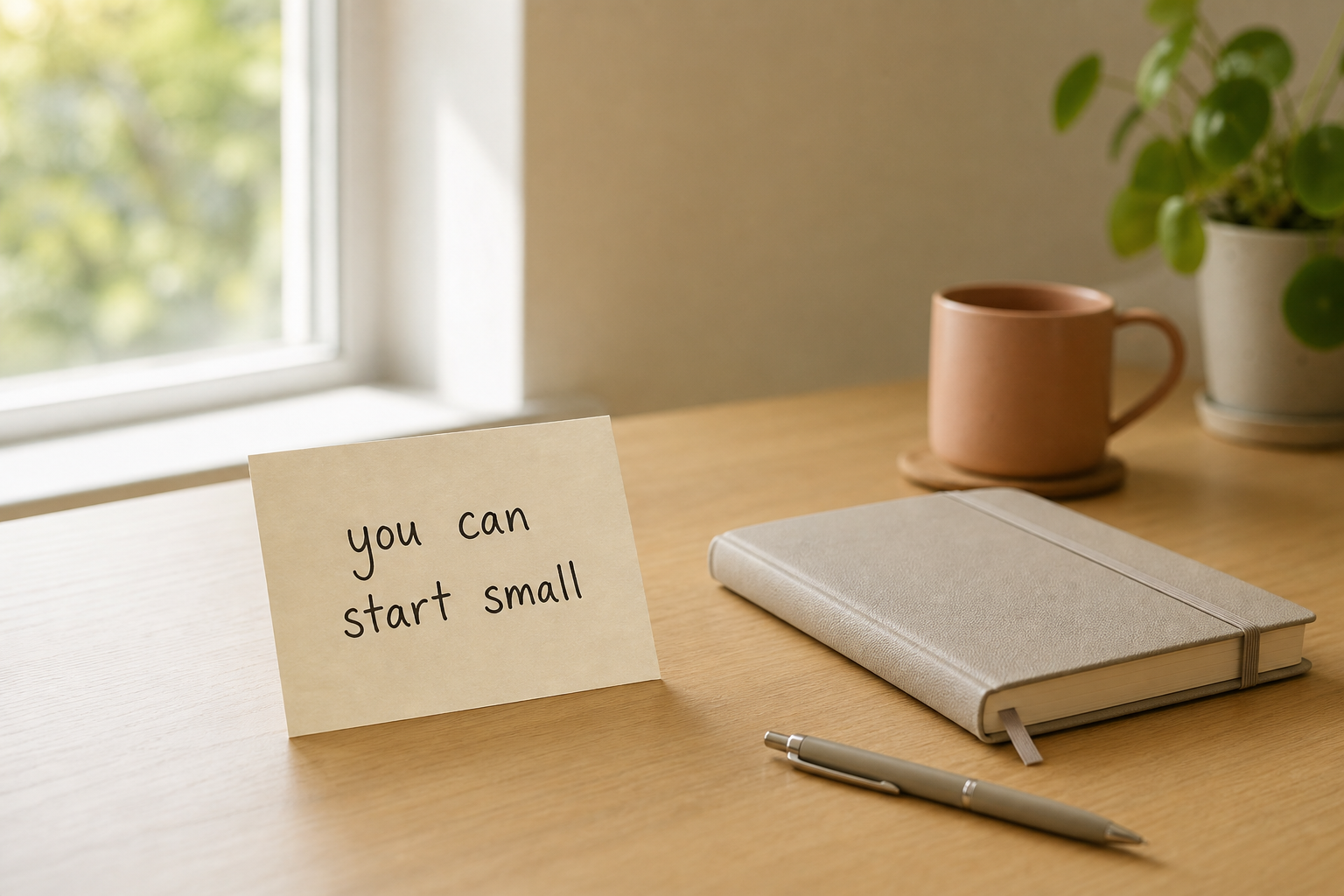
- leaving the notebook already open
- keeping meds and water where you actually see them
- putting the charger in the place you always land
- reducing visual clutter near the task you want to reopen
- giving unfinished work one visible home instead of ten hiding spots
The goal is not a perfect room. The goal is a lower-friction return.
Why ADHD brains feel the room so hard
ADHD is not only about attention. It is also about activation. Sometimes the hardest part of a task is not the task. It is the weird fog before the task starts.
Bad environments make that fog thicker.
A setup gets harder when it asks you to:
- search for the tool before you can begin
- clear a surface every single time
- remember where you parked the last step
- ignore six unrelated visual reminders
- make fresh choices before motion even starts
That is a lot of invisible tax. No wonder restarting feels dramatic.
The no-shame way back in
Try building a return path instead of demanding more willpower.
1. Make the first tool obvious
What is the first object the task needs? Not the whole system. Just the first thing.
If writing is the goal, maybe that is the open doc or notebook. If paying bills is the goal, maybe that is the one folder, not the entire desk cleanup. If getting out the door is the goal, maybe that is keys, meds, and bag in one landing spot.
Make the first tool easy to see. Searching kills restarts.
2. Reduce one setup step
Do not redesign your whole life tonight. Just remove one annoying setup move.
Examples:
- keep the vacuum plugged where you use it most
- leave the tab pinned instead of reopening it daily
- store dog-walk stuff by the door
- keep a catch-all tray for pocket items
- put tomorrow's paper on the keyboard
Tiny setup cuts matter because ADHD brains feel repeated friction more than productivity gurus admit.
3. Create one ready landing zone
You need one place where unfinished things can wait without disappearing. A desk corner. A tray. A clipboard. One section inside Mission Control.
The rule is simple: If the task is not done, it goes back to the same visible home.
That way tomorrow does not begin with archaeological research.
What this looks like in real life
If mornings keep starting sideways
Do not promise a better attitude. Stage the opening move. Water bottle visible. Meds visible. First note visible. Bag staged. The room can carry part of the startup load.
If work keeps going cold after interruptions
Leave a breadcrumb before you step away. Open tab. Half-finished sentence. Sticky note with the next move. That is environment design too. You are making re-entry cheaper for future-you.
If home clutter keeps raising the cost
Pick one surface to defend. Not the whole house. One surface that supports a real daily task. A clear launch pad beats a guilt marathon.
What to avoid
Environment design stops helping when it turns into another perfection project.
Watch for these traps:
- reorganizing instead of doing the task
- buying containers for a problem a tray could solve
- hiding everything so well that you forget it exists
- creating five landing zones instead of one
- making the setup prettier but not easier to reopen
The room does not need to look impressive. It needs to make the next step easier.
One simple environment rule
Try this today:
Pick one task that keeps going cold. Remove one setup step. Make one first tool visible. Give unfinished work one landing spot.
That is enough.
Less search. Less setup. Less shame pretending to be strategy.
If you want a quick gut-check on where your ADHD friction is really coming from, take the ClarityBolt quiz:
https://www.claritybolt.com/quiz
And if you want one trusted place to hold priorities, loose ends, and the next visible step without scattering them across every flat surface you own, Mission Control is built for exactly that:
Shape the room. Lower the drag. Give yourself a cleaner way back in.
try the tool
Ready to try Mission Control?
A dark-themed daily dashboard for Excel and Google Sheets. $24.99.
See everything included before you buy