
The ADHD Search Tax: Give Repeat Items One Obvious Home

A lot of ADHD overwhelm is not one giant failure.
It is ten tiny searches.
Where is the charger? Where did I put the notebook? Which tab was I using? Did I move the meds? Why am I checking three rooms for the same thing again?
That loop costs more than time.
It costs your start. It costs your patience. It costs your willingness to even begin.
That is the search tax.
It is the energy you keep paying because the same important things do not have one obvious home.
The fix is not becoming more careful. The fix is making fewer places possible.
What the search tax actually is
The search tax is the hidden cost of re-finding repeat items.
Not rare items. Repeat items.
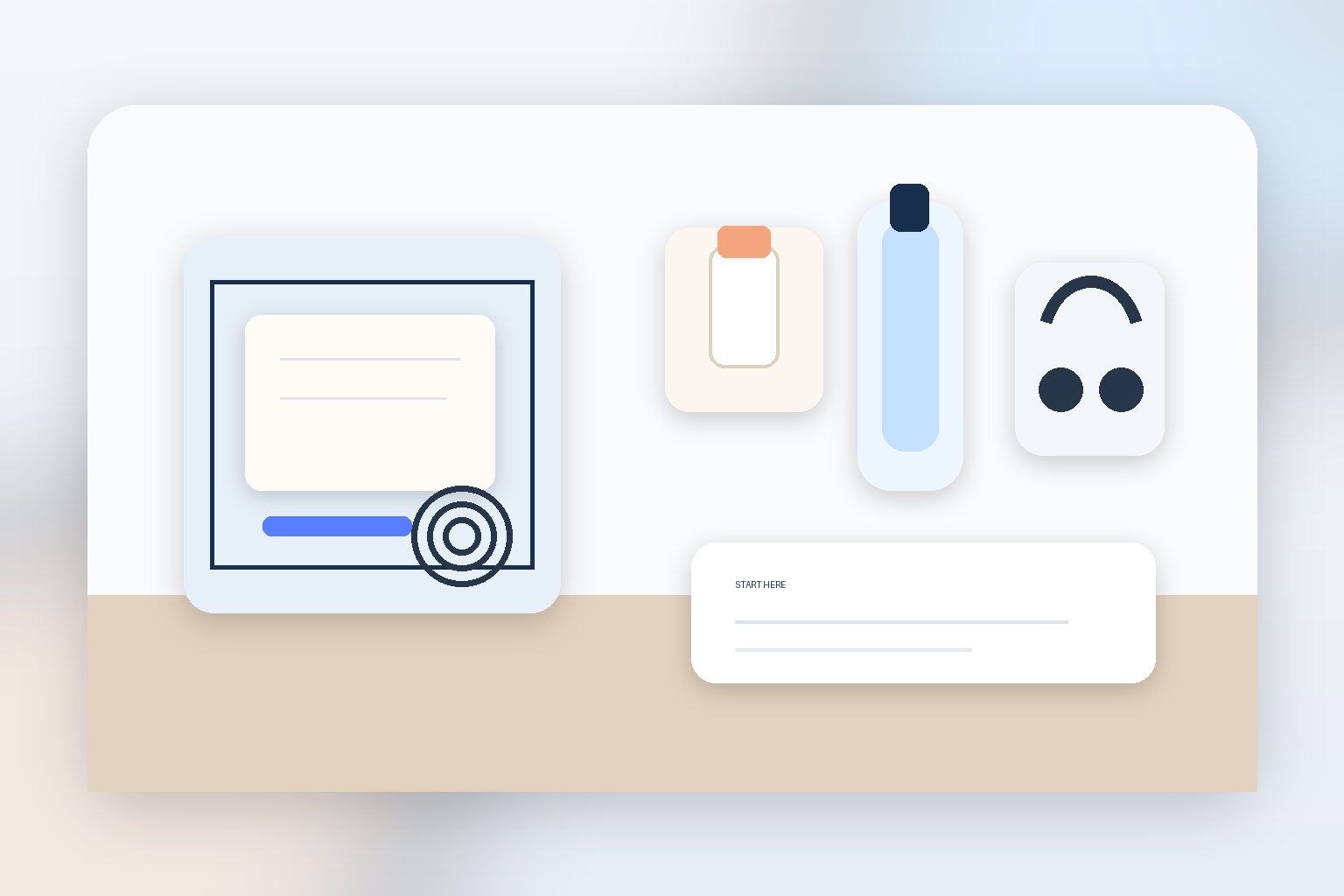
The things you use over and over:
- your charger
- your notebook
- your headphones
- your meds
- your water bottle
- the paper you keep needing again
- the one browser tab or app you always reopen
When those things can live anywhere, your brain has to run a search mission every time.
ADHD brains are already using extra fuel to switch, remember, and restart. Making them hunt too is just rude.
Why this gets expensive fast
Searching does not stay contained.
You go looking for one cable. Then you notice the clutter pile. Then you remember an email. Then you open a different tab. Then you forget the original point.
Now the search has turned into drift.
This is why small disorganization can create way bigger emotional damage than it looks like it should.
It is not just about the object. It is about how many restarts the search creates.
The rule: one obvious home beats the perfect system
You do not need an impressive setup. You need a stupidly obvious one.
The best home for a repeat item is usually:
- visible
- easy to reach
- boring
- consistent
- hard to misunderstand
That might be:
- one tray by the door
- one basket on the counter
- one desk spot for the notebook
- one charging corner
- one shelf for meds and water
- one pinned browser tab group for the daily work stack
The goal is not beauty. The goal is reducing search decisions.
Pick your repeat-search items first
Do not organize the whole house because you lost one thing. That is how ADHD brains end up deep-cleaning a closet instead of fixing the real problem.
Start with the items you search for at least three times a week.
Make a short list:
- what do I keep re-finding?
- what delays my day when it goes missing?
- what starts the biggest annoyance spiral?
Usually the answer is not forty things. Usually it is four.
That is the real lane.
Build one landing zone per context
Think in contexts, not categories.
Home entry context:
- keys
- wallet
- earbuds
- sunglasses
Work-start context:
- laptop charger
- notebook
- pen
- current task note
Morning body context:
- meds
- water bottle
- protein bar
- whatever helps you stop starting from zero
If the needed items always show up together, let them live together.
Your brain should not have to assemble the kit from five locations every day.
Make the home louder than the clutter
If the official home blends into the mess, it is not a real home yet.
Use cues that are hard to miss:
- a tray that contrasts with the surface
- a small bin with open top, not a drawer
- a sticky note label for a week or two
- placing the item dead center, not tucked behind something
- removing the junk that competes with it
This matters.
ADHD systems fail when the right place is technically correct but visually invisible.
Digital search tax is real too
This does not only happen with physical stuff.
A lot of people are paying the search tax inside their laptop all day.
Examples:
- reopening the same four tabs from memory
- digging through downloads for the same file
- searching Slack or email for the same link
- clicking around Notion, Docs, and desktop folders to figure out where work starts
Same fix. Give repeat digital items one obvious home.
That might be:
- one pinned browser window for work
- one desktop folder called TODAY
- one note called START HERE
- one bookmarks folder for the tools you use daily
- one current-project doc linked at the top of your workspace
You are not trying to look organized. You are trying to stop burning attention on retrieval.
What not to do
Do not respond to the search tax by buying twelve containers before you know the real pain points.
Do not create a cute system with six subcategories for one charger.
Do not hide the solution inside a drawer full of "organized" nonsense.
And do not expect yourself to remember a new system that still asks for too many steps.
If putting the item away feels annoying, your brain will freelance.
A simple reset you can do today
Pick one repeat item that keeps stealing your start.
Then do this:
1. Decide its one home. 2. Clear that spot. 3. Put the item there now. 4. For the next seven days, return it only there. 5. If it keeps failing, make the home more visible or easier.
That is enough.
Not a life overhaul. Just one tax cut.
Why this helps shame too
A lot of ADHD frustration sounds like this:
I just had it. Why am I like this? How am I already off track?
But the issue is often not character. It is system ambiguity.
When the same item has five possible homes, your brain is doing detective work before breakfast.
That is not a moral failure. That is bad infrastructure.
Better infrastructure feels kinder because it is kinder.
CTA
If you keep getting derailed by invisible friction, take the ClarityBolt quiz and find the bottleneck that is actually draining your days.
And if you want one clear place to keep your next steps visible instead of scattered everywhere, Mission Control gives your brain a clean home base.
try the tool
Ready to try Mission Control?
A dark-themed daily dashboard for Excel and Google Sheets. $24.99.
See everything included before you buy