ADHD Survival Mode Station: What to Set Out Before the Wheels Come Off
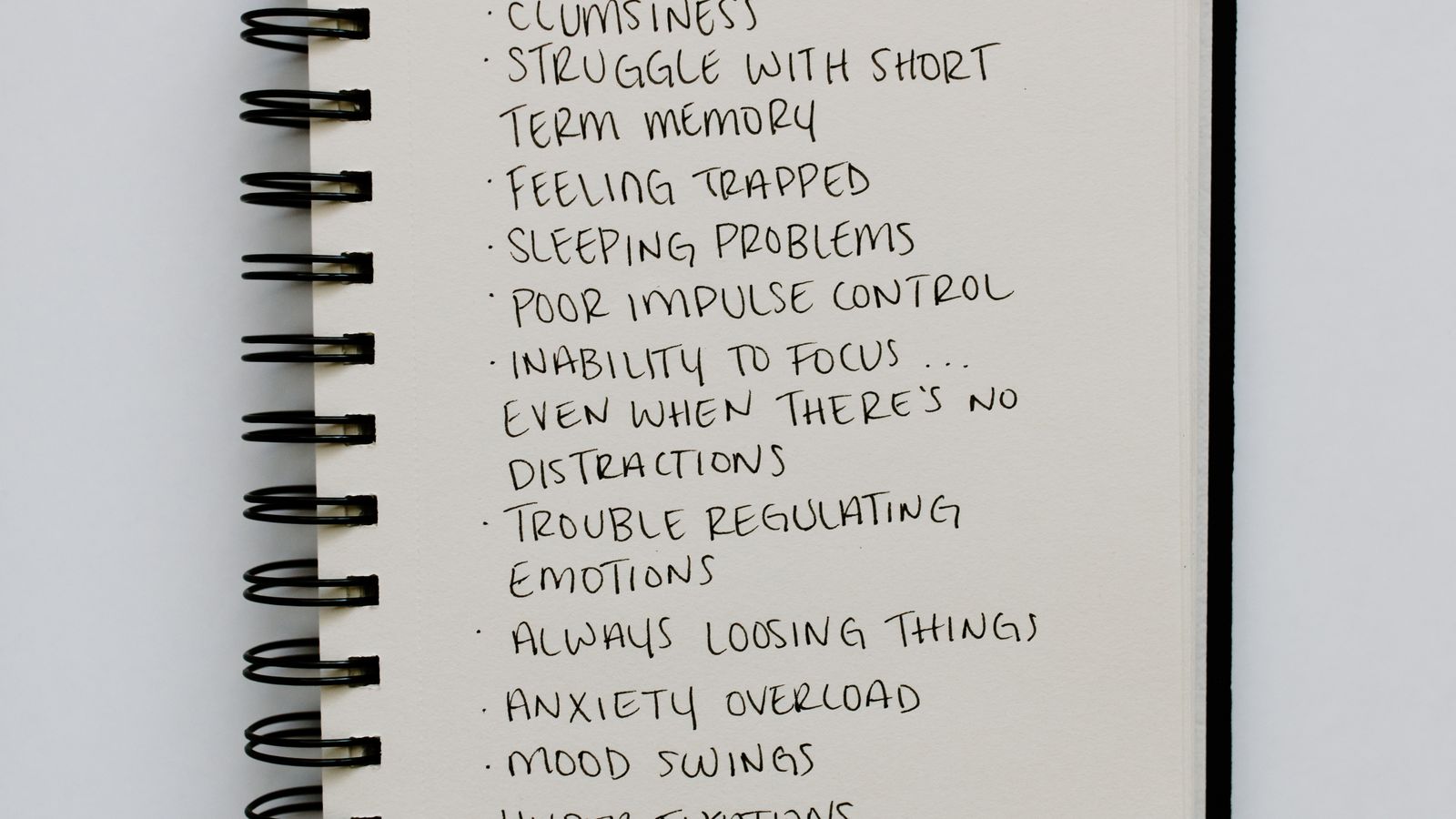
A recent ADHD video about survival mode landed because a lot of people know the feeling immediately. Not lazy. Not broken. Just past the point where normal systems still work.
When that happens, the answer is usually not a bigger planner, a prettier checklist, or a promise to finally get it together tomorrow. The answer is a fallback setup.
Something small. Visible. Easy enough to use when your brain is already smoking a little.
What survival mode actually breaks
When you are overloaded, basic things start costing too much.
- finding your charger
- remembering whether you took meds or vitamins
- getting water before the headache starts
- figuring out what to eat
- deciding what matters first
None of those are giant tasks. That is the point.
ADHD overwhelm often gets worse through tiny failures, not dramatic ones. You miss one basic thing. Then another. Then your brain starts handling the whole day like a fire drill.
Build one survival mode station
Pick one spot that is easy to see and hard to ignore.
That could be:
- one kitchen counter corner
- one tray near your desk
- one shelf by the door
- one basket you can carry room to room
Put only your fallback essentials there. Not your dream routine. Not your full wellness era. Your minimum useful version.
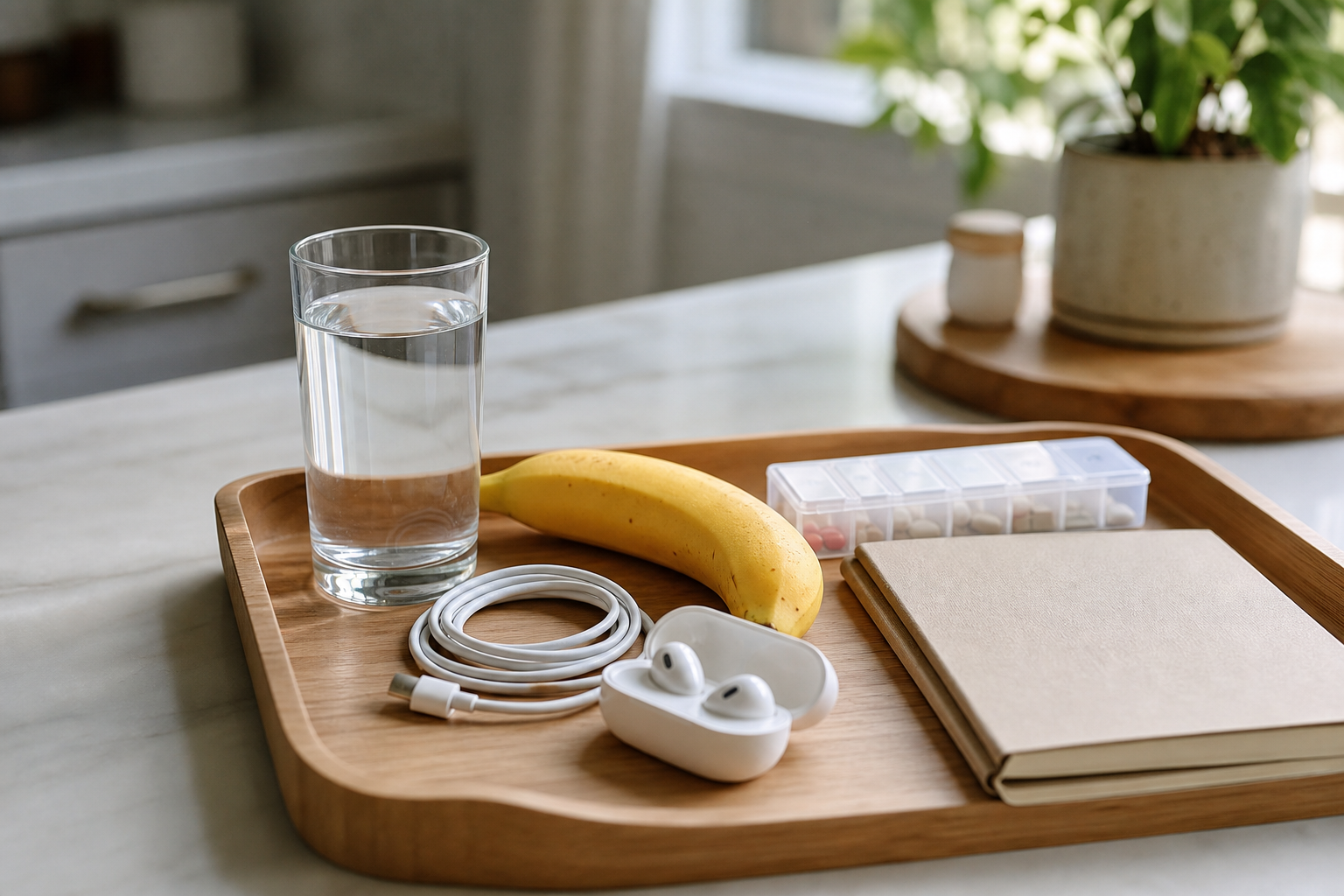
A good station might include:
- water bottle or cup
- charger
- simple snack
- meds or vitamins if that is part of your real routine
- notebook or sticky note
- one pen
- headphones or earplugs
The point is not aesthetic perfection. The point is reducing scavenger hunts.
Make the station answer one question
The question is: What do I need when I stop functioning like my best self?
That answer is different for everybody. But it should be practical, not aspirational.
Bad example:
- journal prompts
- seven supplements
- full meal prep plan
- color-coded recovery checklist
Better example:
- water
- protein bar
- charger
- meds
- one place to write the next thing down
If your system only works when you feel great, it is not your survival mode system. It is your good day system.
Add one tiny reentry cue
A station helps even more if it includes one clear next-step cue.
That can be a sticky note with one of these:
- drink water
- take meds
- eat something
- write the next task
- do the first two minutes only
Not ten steps. One.
In survival mode, you do not need motivation first. You need less friction.
Why this works better than trying harder
When you are overwhelmed, your working memory gets bossy and unreliable at the same time. You are trying to hold too much while also forgetting obvious things.
A visible station offloads some of that load. It lets the room do a little remembering for you.
That matters. Because a lot of bad ADHD days are really just support failures in disguise.
You did not need a personality transplant. You needed water, power, food, and one visible next move before the spiral got expensive.
Keep it alive without turning it into another project
Do not overmanage this. Just reset the station when you notice it getting thin.
A simple rule works:
- if you use the last snack, replace it later
- if the charger leaves, bring it back tonight
- if the note gets messy, start a fresh one
This should feel like maintaining a landing pad, not running a second household.
Start smaller than you think
You do not need a perfect ADHD cart. You need one spot that makes a rough day less rough.
If you want help figuring out which kind of support system fits your brain, take the ClarityBolt quiz:
https://www.claritybolt.com/quiz
And if you want a paper system that gives your next step, loose thoughts, and daily priorities a clear home, Mission Control fits this kind of brain well:
try the tool
Ready to try Mission Control?
A dark-themed daily dashboard for Excel and Google Sheets. $24.99.
See everything included before you buy