
The ADHD Lunch Anchor: Stop Letting Hyperfocus Steal Your Afternoon
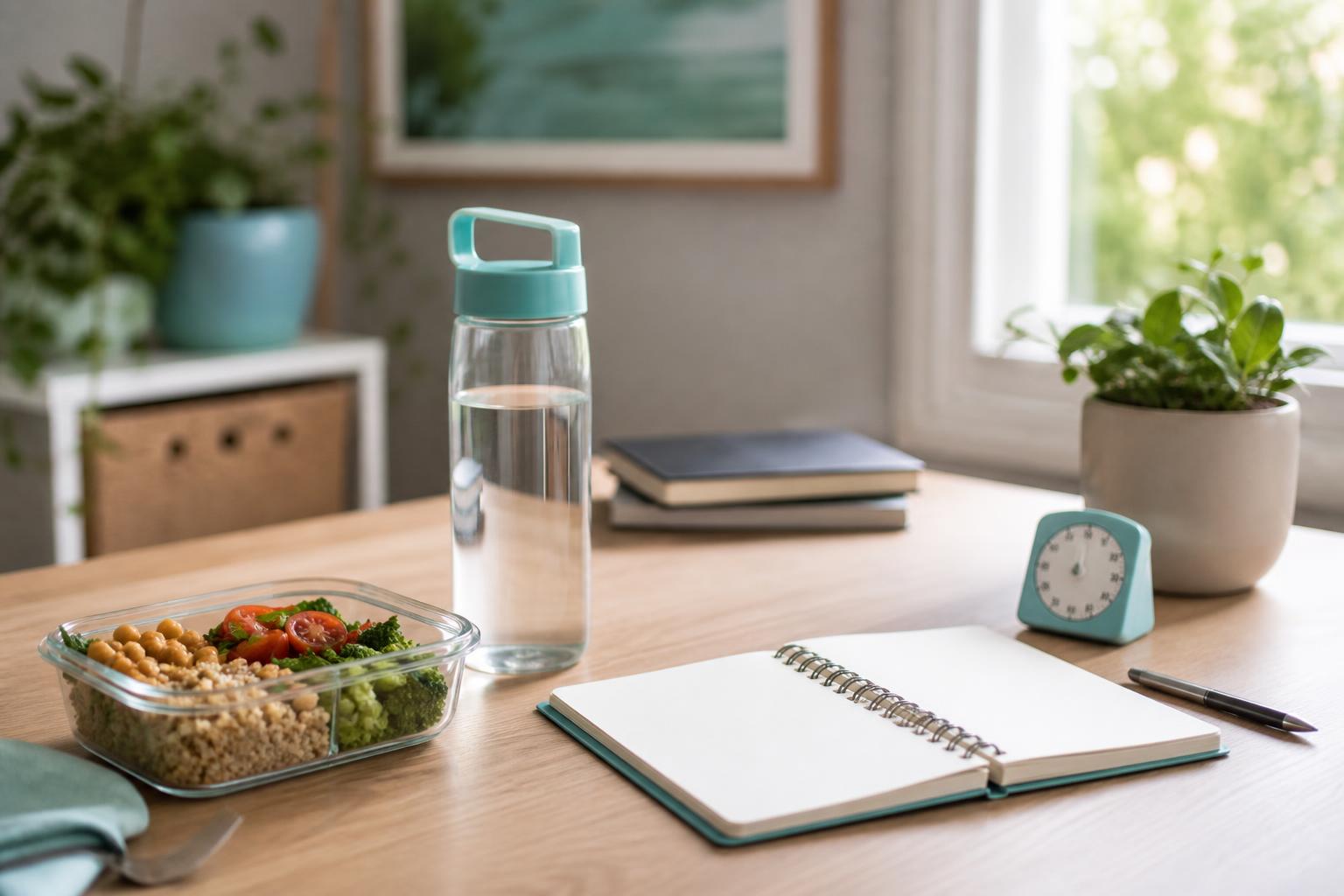
There is a version of an ADHD day that looks productive right up until it does not.
You get moving. You lock in. You finally stop resisting the work. Then you look up at 2:17 PM and realize you have had coffee, half a thought, and maybe three almonds.
Now everything feels fake-hard.
The email you could have answered in two minutes feels rude. The task you were handling fine an hour ago feels sticky. Your brain starts telling you that you are lazy, scattered, behind, broken, or just not doing enough today.
Sometimes the problem is not motivation.
Sometimes the problem is that your brain is trying to do executive function on fumes.
What a lunch anchor is
A lunch anchor is not a perfect routine. It is one reliable moment in the middle of your day where you force three things to happen before the afternoon gets to vote:
- food
- water
- a 2-minute reset
That is it.
Not a wellness ritual. Not a meal-prep fantasy. Not a color-coded life rebuild.
Just one protected checkpoint that keeps hyperfocus from eating the entire second half of your day.
Why this matters more for ADHD brains
ADHD does not just make it hard to start. It also makes it weirdly easy to ignore body signals when your attention gets locked onto something else.
That is why this issue keeps showing up in current ADHD videos and articles about appetite, hyperfocus, and afternoon crashes. The pattern is painfully familiar: people do fine for a while, skip the basics, then assume the later crash means they suddenly lost discipline.
Usually the crash started earlier than that.
It started when the body got ignored and the brain kept trying to brute-force clarity anyway.
The part most people get wrong
A lot of people wait until they feel awful to intervene.
That is too late.
If your lunch plan begins at when I remember, your ADHD brain will often remember after the dip has already started.
The better move is to make lunch an anchor, not a feeling.
That means it happens because the clock, your calendar, your planner, or your checklist says it happens. Not because your body sent a polite memo you happened to notice.
How to build a lunch anchor that actually works
1. Attach it to a time range, not an exact perfect minute
Do not make this 12:00 PM or failure.
Give it a window like 11:45 to 1:15. That is flexible enough for real life but firm enough to exist.
2. Pre-decide the default lunch
Decision fatigue is a big reason lunch disappears.
Your default lunch does not need to be exciting. It needs to be easy enough that your brain cannot turn it into a negotiation.
- protein shake and fruit
- leftovers you can microwave fast
- turkey wrap
- yogurt plus something salty and something simple
- whatever you will actually eat without creating a second project
The right lunch is the one that still happens on a messy day.
3. Pair lunch with water immediately
Do not create separate systems for food and hydration if one cue can handle both.
If lunch starts, water happens too. One rule. Less friction.
4. Add a 2-minute reset before you go back in
Before you dive back into work, do a very small reset:
- close random tabs
- write the next task in one sentence
- clear one square foot of desk space
- move the next item into view
You are not trying to optimize your life. You are trying to make re-entry cheaper.
5. Make the restart obvious
Do not end lunch with a blank runway.
Before you step away, leave one visible next move for after lunch. Open the file. Put the paper in the center. Write the next step in your planner. Highlight the one thing that matters most.
A good lunch anchor does not just feed you. It hands your afternoon a cleaner starting point.
A simple version if your day is chaotic
Before 1:15 PM, I eat one real thing, drink water, and write one clear next step.
That is enough.
You do not need to earn lunch by finishing more first. That logic is one of the fastest ways to accidentally wreck the rest of the day.
What to do if you already missed it
Fine. Do not turn it into a shame spiral.
Run the late version:
- eat something now
- drink water now
- reduce the next task size by half
- stop expecting peak-brain performance from an under-fueled afternoon
The goal is not moral purity. It is damage control.
If this happens constantly, the real issue may be system design
If you keep disappearing into work and forgetting basic care, you may not need more self-criticism. You may need a more visible system.
That is exactly why external structure helps. A planner, dashboard, or daily command center can make meals, priorities, and re-entry steps visible before the crash instead of after it.
If you want a quick read on where your friction points actually are, take the ClarityBolt quiz: https://www.claritybolt.com/quiz
If you want one place to hold your priorities, parking lot, and restart cues so the day stops living only in your head, Mission Control fits this problem well: Mission Control on Etsy
Bottom line
If your afternoon keeps collapsing, do not assume you have a character problem.
Check whether you have a fuel problem, a visibility problem, or a re-entry problem.
For a lot of ADHD adults, lunch is not a break from productivity. It is the thing that keeps the second half of the day from falling apart.
try the tool
Ready to try Mission Control?
A dark-themed daily dashboard for Excel and Google Sheets. $24.99.
See everything included before you buy